Triumph Trident Build
Article by Mark Trotta
Purchased in 2007, this 1974 Triumph Trident was non-running, partially disassembled, but mostly complete. The state inspection decal showed it was last registered in 1982.
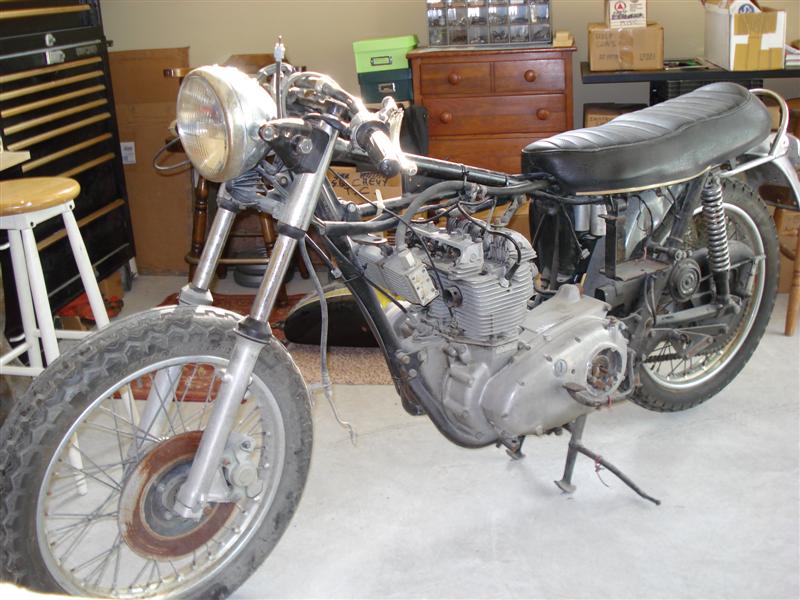
One could only guess as to why a previous owner had the motor apart. My worst suspicion was internal engine damage. But good luck prevailed, and I was able to get this classic British machine running again.
Inspection and Testing
Before checking the engine compression, the oil tank and lines were drained, cleaned, and flushed. The oil screen was changed and the motor refilled with fresh 20/50 weight oil. A compression check showed all cylinders to be within specs.

After adjusting the valves, new rocker box gaskets were installed.

Pictured: Top End Gaskets
Carb Rebuild (x3)
Triumph Tridents were factory-equipped with three 26mm Amal Concentric carburetors. Rebuilding included removal, disassembly, cleaning, inspection, reassembly, and re-installing.

Several places online specialize in classic Triumph parts. I've ordered from The Bonneville Shop in Montana several times with no issues.
*************
Gas Tank and Fenders
A session with #000 steel wool revealed both chrome fenders to be in excellent condition.
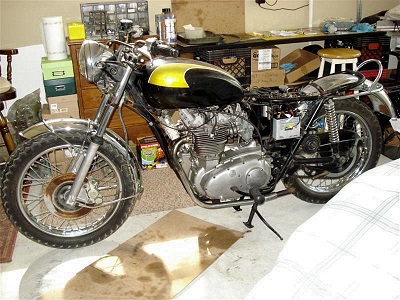
Although the original paint on the tank was still good, the inside was rusty, but Ok for re-use after cleaning and installing new fuel filters.

*************
Electrical System
Here in America, there was always a mystique about vintage British electrics, and there shouldn't be.
Despite what you may have heard or read, the factory Lucas electrical system wasn't terrible. When kept in proper working order, it was completely adequate for non-competition use.
Positive Ground
The simplest way to diagnose a positive-ground system is to reverse any diagnostic procedure normally used on a negative-ground system.
Instead of starting on the positive side of the battery and following the current that way, I started at the negative side of the battery and followed the current the other way.
After tightening up some loose ends and cleaning a few dirty connections the electrical system checked out O.K. The three sets of points were cleaned and properly set.

Pictured: This finned device is a zener diode. Apparently it was used as a surge protector to limit voltage spikes.
*************
Brake Caliper Rebuild
The front rotor was reusable, but the caliper required cleaning and a rebuild kit. After disassembly, the piston and bore were examined for nicks and grooves. A rule of thumb here is if a groove in the bore can catch your fingernail, it's going to need to be re-sleeved. If needed, replacement caliper pistons are available (measure size before ordering).
Minor pitting of the piston bore was cleaned up, and several small scratches were taken out by lightly sanding with fine Emery cloth.
*************
Getting The Bike Started
I was now getting spark at the plugs and gas to the carbs.
After dozens of kicks, it still wouldn't start.
Turns out that without the original air cleaner installed (which I didn't have), the carbs were getting too much air, even with the choke fully out. To compensate, the bottom halves of the three carbs were covered up with duct tape. Within a few kicks after that, it fired up.
*************
I didn't have this bike very long, I sold it shortly after getting it running. At the time, I was neck deep in projects, and something had to go.
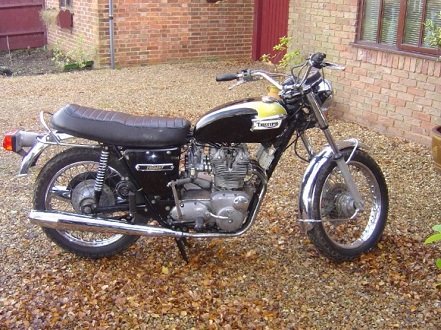
Read: Triumph Trident History
*************
Related Articles: